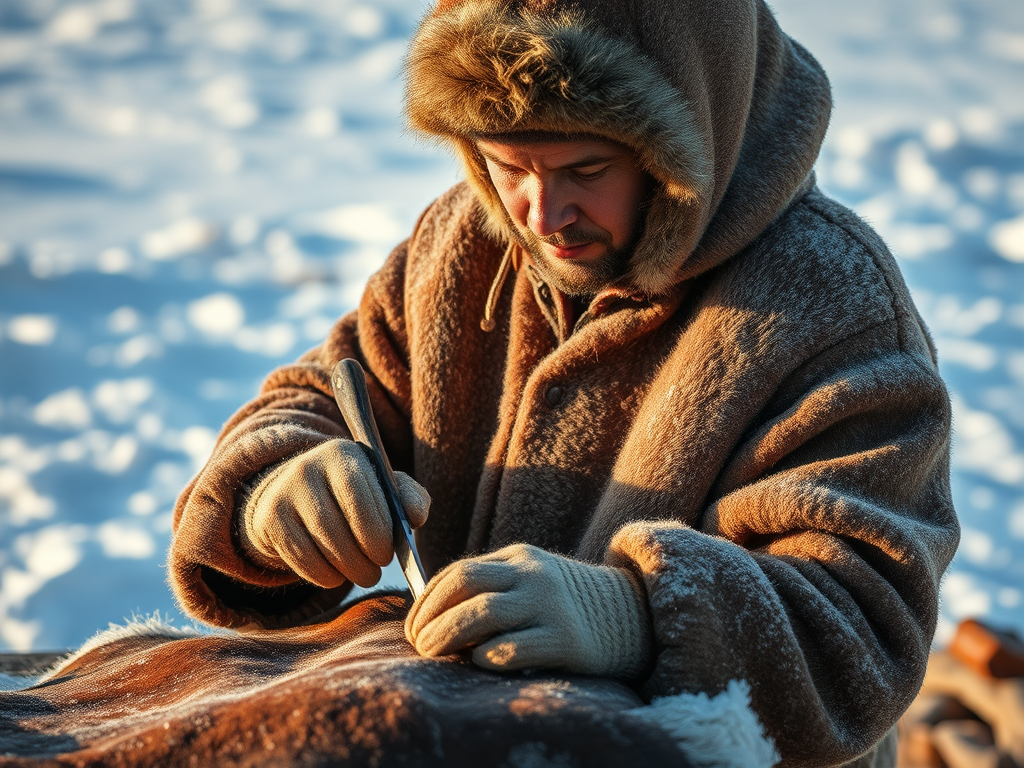
In winter, clothing isn’t fashion.
It’s infrastructure.
Modern gear makes us forget this, but for most of human history, staying alive in cold environments depended on one skill above almost all others: turning animal hide into something you could wear.
Hide clothing doesn’t just keep you warm. It changes how long you can stay still, how much energy you burn, and how exposed you are to the environment. Once you can make it, winter stops being a countdown and starts being manageable.
This isn’t about perfection. It’s about function.
Basic hide clothing is rough, time-consuming, and imperfect — but it works. And in winter, working beats everything else.
Why Hide Clothing Matters in Winter
Cold kills through heat loss. Clothing is how you slow that process.
In winter conditions, hide clothing provides:
- Wind resistance
- Insulation through trapped air
- Durability under hard use
- Repairability with simple tools
- Long-term sustainability
Plant fibers struggle in deep cold. Woven fabrics tear, soak, and lose insulation when wet. Hide, when prepared correctly, does the opposite. It blocks wind, sheds moisture, and insulates even when conditions aren’t ideal.
This is why cold-weather cultures relied on hides for thousands of years. Not because they were primitive — but because they were effective.
The Mental Shift: Hide Is a Process, Not a Product
One of the biggest mistakes beginners make is thinking of hide as material you have.
You don’t have hide.
You have potential.
Fresh hide rots. Wet hide freezes stiff. Untreated hide becomes rawhide — hard, brittle, and unforgiving. Clothing-grade hide only exists after deliberate processing.
Making hide clothing requires patience more than strength. Rushing ruins it. Neglect destroys it.
Winter rewards the people who understand that time invested early saves energy later.
Step One: Choosing the Right Hide
Not all hides are equal, and size matters less than condition.
Good beginner hides:
- Deer
- Goat
- Sheep
- Smaller ungulates
Large hides (elk, moose, bison) are excellent but physically demanding to process. Smaller hides teach technique without exhausting you.
What you want:
- Minimal damage
- No advanced rot
- Thick enough to insulate
- Thin enough to work by hand
Fresh is best, but frozen hides can be worked if thawed carefully.
Transition: Skinning With Clothing in Mind
How you remove the hide determines how usable it will be later.
For clothing, you want:
- Clean cuts
- Minimal holes
- Even thickness
- Intact edges
Every cut becomes a weak point. Every tear limits pattern options.
This isn’t about speed. It’s about preservation.
Think ahead: where will seams go? Where do you need strength? Winter clothing isn’t tailored — it’s strategic.
Step Two: Fleshing the Hide
Once removed, the hide still contains fat, tissue, and membrane. All of it must go.
If you skip this step, the hide will:
- Rot
- Smell
- Harden unevenly
- Fail under stress
Fleshing involves scraping the inner side of the hide until it’s clean and smooth.
Tools can be simple:
- A dull knife
- A bone scraper
- A smooth-edged stone
The goal isn’t cutting. It’s pushing material off without slicing into the hide itself.
This step takes time. It is unglamorous. It is essential.
Why Clean Hide Is Warmer Hide
Fleshing isn’t just about preservation — it affects insulation.
Residual fat stiffens in cold. Tissue traps moisture. Clean hide flexes, breathes, and insulates more evenly.
Winter clothing needs to move with you. Stiffness costs energy and increases heat loss.
This is where patience pays off later.
Step Three: Stretching and Drying (Without Ruining It)
After fleshing, the hide must dry — but not uncontrollably.
If hide dries without tension, it shrinks and hardens into rawhide. That’s great for drums and containers. It’s terrible for clothing.
To prevent this, the hide must be:
- Stretched
- Worked
- Manipulated as it dries
This can be done by:
- Lacing it into a frame
- Pegging it to the ground
- Pulling and flexing it repeatedly by hand
The goal is to interrupt fiber bonding as moisture leaves.
Drying hide is active labor, not passive waiting.
Transition: Softness Is Made, Not Found
Soft hide doesn’t happen by accident.
Every soft hide you’ve ever seen was worked into softness. This is the step where many people quit — because it’s repetitive, tiring, and slow.
But this is also where hide becomes clothing instead of material.
Working the hide involves:
- Stretching
- Twisting
- Pulling
- Folding
- Repeating until dry
The fibers break microscopically, creating flexibility and insulation.
This is ancient technology, refined by necessity.
Step Four: Brain Tanning (The Simplest Method)
The most basic and accessible tanning method uses the animal’s own brain.
There’s a saying: every animal has just enough brain to tan its own hide.
Brains contain emulsified oils that penetrate hide fibers and preserve flexibility.
Basic process:
- Cook the brain in water until broken down
- Mash into a slurry
- Work the mixture thoroughly into the damp hide
- Allow it to soak
- Stretch and dry again
This step stabilizes the hide and makes softness permanent.
It smells. It’s messy. It works.
Why Tanning Matters for Winter Clothing
Untanned hide stiffens when wet and freezes hard in cold. Tanned hide stays flexible and usable.
Winter clothing must:
- Move with you
- Insulate while damp
- Resist cracking in cold
- Be repairable
Tanning is what gives hide those properties.
Skipping it turns clothing into a liability.
Step Five: Smoking the Hide (Optional, But Powerful)
Smoking adds water resistance and longevity.
By exposing the hide to cool wood smoke:
- Fibers absorb preservative compounds
- Water resistance improves
- Hide gains antimicrobial protection
- Softness becomes more stable
Smoked hide darkens and smells smoky — but performs better in winter.
Many traditional cold-weather hides were smoked for exactly this reason.
Transition: From Hide to Clothing
Once the hide is soft, tanned, and dry, it becomes usable.
This is where people overcomplicate things.
Basic hide clothing is not tailored. It is layered and wrapped.
Think:
- Capes
- Tunics
- Leg wraps
- Moccasins
- Hooded coverings
Simple shapes conserve material and reduce weak seams.
Cutting and Stitching Basics
When cutting hide:
- Cut conservatively
- Use natural contours
- Avoid thin edges
- Think in panels, not shapes
Stitching can be done with:
- Sinew
- Rawhide strips
- Plant fiber cordage (less ideal)
Seams should be:
- Overlapped, not edge-to-edge
- Reinforced at stress points
- Positioned away from constant flex
Winter clothing fails at seams first.
Insulation Comes From Air, Not Thickness
A common misconception is that thicker hide equals warmer clothing.
Warmth comes from trapped air.
Loose-fitting hide garments with space for air layers insulate better than tight ones. This is why traditional winter clothing often looks bulky and oversized.
Compression kills insulation.
Design accordingly.
Common Hide Clothing Mistakes
These errors show up repeatedly:
- Letting hides dry without working
- Skipping fleshing
- Rushing tanning
- Cutting too aggressively
- Making garments too tight
- Ignoring moisture management
Winter amplifies mistakes. Hide clothing demands respect for process.
Modern Lessons From an Ancient Skill
Hide clothing teaches something modern life forgets:
- Systems matter
- Comfort is built, not bought
- Time investment compounds
- Durability beats convenience
This skill isn’t nostalgia. It’s applied wisdom.
Final Thought: Clothing Is a Survival System
When you wear hide clothing you made yourself, something changes.
You move differently.
You plan differently.
You understand cold differently.
Because you know exactly how much work stands between you and warmth.
Hide clothing isn’t about going backward.
It’s about remembering what works.
And in winter, what works is everything.
Kommentar verfassen