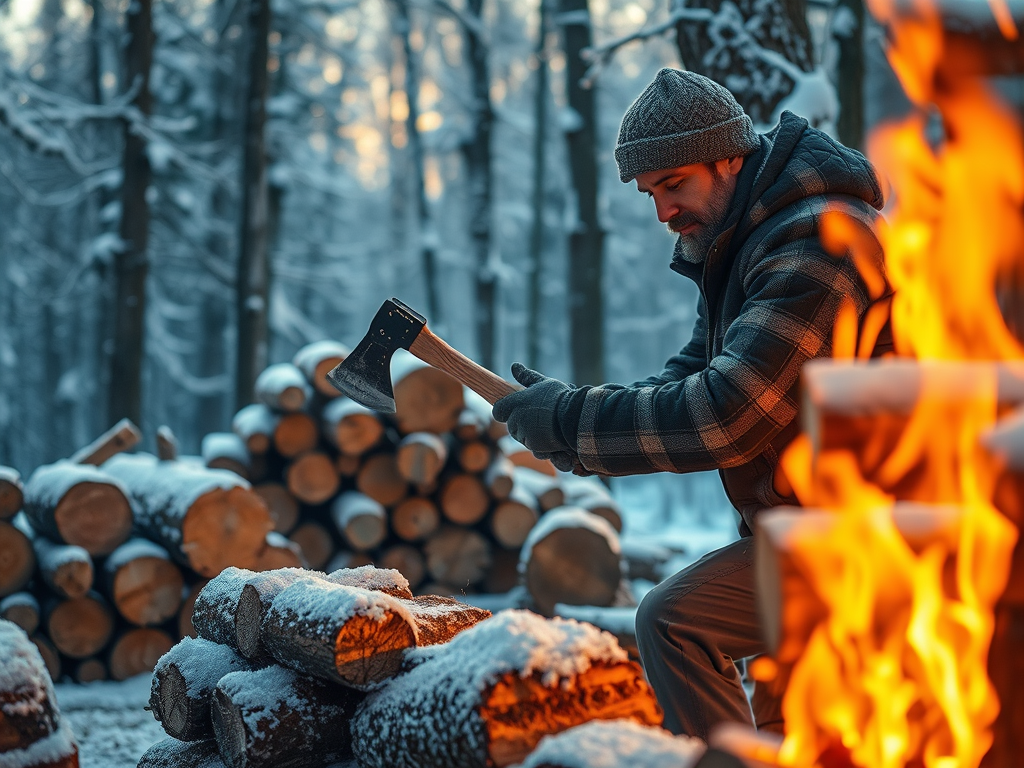
Firewood is not just fuel.
It is stored heat.
When winter shows up, you are no longer gathering resources — you are living off decisions you made earlier. Every split log represents hours of future warmth, cooked food, dried clothes, and protected sleep.
Making firewood is not about swinging an axe hard. It’s about turning raw material into something reliable, predictable, and usable when conditions are worst.
People who stay warm in winter didn’t work harder — they worked earlier and smarter.
The Mental Shift: Firewood Is a System, Not a Chore
Most people treat firewood like a task: cut some logs, split them, stack them.
That mindset leads to shortages, inefficiency, and wasted effort.
Firewood is a system:
- Sourcing
- Processing
- Drying
- Storing
- Rationing
If any part fails, the whole system collapses. Winter doesn’t care how strong you are — it cares whether your system holds.
Once you see firewood as future security instead of present labor, the work changes.
Choosing the Right Wood: Not All Trees Are Equal
Good firewood starts with the right material.
The best firewood is:
- Dead or standing dead
- Dry or drying
- Dense
- Straight-grained
Avoid:
- Fresh green wood (heavy, wet, inefficient)
- Punky or rotted wood
- Extremely knotty trunks
- Wood buried in snow or soaked on the ground
In winter survival, dryness beats species. A mediocre dry wood outperforms premium wood full of moisture.
Transition: Harvesting Without Wasting Energy
Once you’ve selected a tree or deadfall, efficiency becomes the priority.
Energy is a currency in winter. Every unnecessary movement costs heat and calories.
Position your work:
- Close to camp
- On stable ground
- With room to move
- Out of deep snow when possible
The goal is to reduce transport distance and handling time. Moving wood burns more energy than cutting it.
Bucking: Turning Length Into Control
Bucking is cutting logs into manageable lengths.
Firewood should be sized based on:
- Stove or fire pit size
- Carrying ability
- Splitting method
Shorter logs:
- Split easier
- Dry faster
- Stack more efficiently
- Fit more fire setups
In winter, shorter is better. Cold stiffens muscles and reduces leverage. Let the saw do the work, not your back.
Support logs to avoid binding your saw, especially when snow masks ground contact.
Transition: Splitting Is About Precision, Not Force
Splitting wood intimidates people unnecessarily.
It’s not about strength — it’s about grain reading.
Every log tells you where it wants to split:
- Visible cracks
- Straight grain
- Existing checks
- Natural seams
Aim for those weaknesses.
If you fight the wood, you lose. If you listen to it, it opens easily.
Tools for Splitting
Common tools:
- Splitting axe
- Maul
- Wedges
- Hatchet (for kindling)
In winter:
- Heavy mauls compensate for reduced swing speed
- Wedges save energy on stubborn rounds
- Smaller pieces reduce drying time
Sharp tools matter. Dull tools waste effort and increase injury risk.
Technique: Let Gravity Work
Good splitting form:
- Feet planted
- Controlled swing
- Eyes on the strike
- Full follow-through
You are guiding the tool, not forcing it.
If a round doesn’t split:
- Rotate it
- Change target
- Use wedges
- Reduce size
Persistence beats brute force.
Transition: Firewood Has Sizes for a Reason
Not all firewood serves the same purpose.
A smart firewood pile includes:
- Large splits (long burns)
- Medium splits (steady heat)
- Small splits (quick warmth)
- Kindling (fire starting)
Winter fires aren’t static. You need options based on weather, fuel availability, and energy levels.
Processing everything the same size is inefficient.
Drying: The Step People Rush and Regret
Freshly cut wood is not ready to burn.
Even dead wood often holds moisture inside.
Drying requires:
- Airflow
- Time
- Exposure (but not saturation)
Stack wood:
- Off the ground
- Loosely
- With space between rows
- Covered on top, open on sides
Snow is less harmful than rain, but meltwater will soak logs if stacking is poor.
Dry wood:
- Burns hotter
- Produces less smoke
- Creates less creosote
- Requires less fuel
In winter, dry wood equals safety.
Transition: Storage Is Firewood Insurance
Once wood is dry, storage preserves that investment.
Good storage:
- Keeps snow off
- Allows airflow
- Prevents ground moisture
- Allows easy access in bad weather
Move daily-use wood closer to shelter before storms. Digging out firewood at night in deep snow is a failure of planning.
Firewood should be closer than water when temperatures drop hard.
How Much Firewood Is Enough?
The honest answer: more than you think.
Cold increases consumption. Wind increases consumption. Dampness increases consumption. Fatigue increases consumption.
A safe rule in winter:
- If you think you have enough, add more.
Running out of firewood isn’t uncomfortable — it’s dangerous.
Common Firewood Mistakes
Most problems trace back to:
- Cutting green wood too late
- Leaving logs unsplit
- Stacking on bare ground
- Ignoring drying time
- Processing everything the same size
- Waiting until cold sets in
Firewood rewards foresight and punishes procrastination.
Modern Lessons From an Old Task
Firewood teaches patience and systems thinking.
You don’t feel the benefit immediately. The payoff arrives later — quietly, repeatedly, reliably.
That’s how winter survival works.
Preparation isn’t dramatic. It’s cumulative.
Final Thought: Firewood Is Warmth You Earn in Advance
Every log you split is heat you won’t have to fight for later.
When the wind howls, when snow piles up, when movement becomes expensive — firewood turns effort into comfort and danger into control.
Winter doesn’t reward strength in the moment.
It rewards preparation before the moment arrives.
Firewood is proof you understood that difference.
Kommentar verfassen