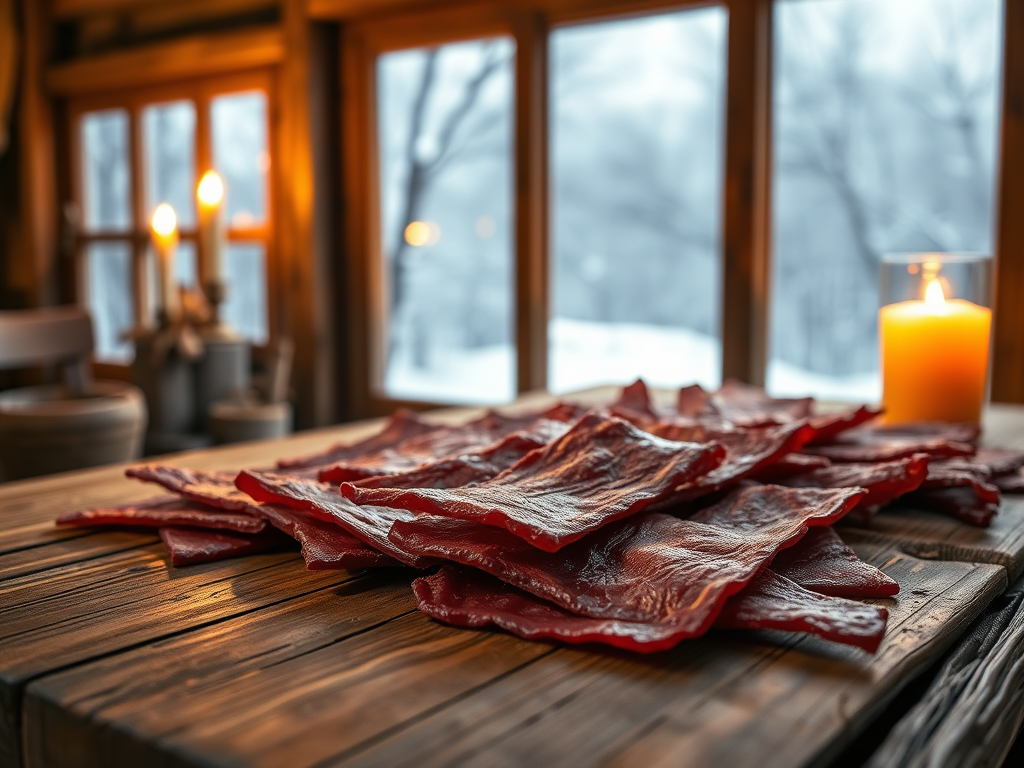
Fresh meat is a liability.
It spoils quickly, attracts attention, and forces urgency. In cold weather, it freezes. In mild weather, it rots. Either way, it controls you instead of the other way around.
Jerky flips that dynamic.
Jerky is meat that no longer panics you. It’s protein you can carry, ration, and rely on without racing the clock. Done right, it lasts weeks or months. Done wrong, it wastes one of the most valuable resources you can have in winter: calories that don’t demand daily attention.
Making jerky isn’t cooking.
It’s preservation.
And preservation is about discipline, not flavor.
Why Jerky Matters More in Winter
In winter, food problems compound.
Hunting is harder. Fishing is slower. Gathering costs more energy. Cooking burns fuel you can’t waste. Eating becomes something you schedule carefully instead of casually.
Jerky solves several winter problems at once:
- High calorie density
- No cooking required
- Lightweight and portable
- Doesn’t freeze solid
- Easy to ration
- Stable during travel
That last point matters more than people realize. Winter movement burns calories fast. Food you can eat without stopping, cooking, or thawing preserves momentum — and momentum preserves warmth.
Jerky is food that respects winter constraints.
The Mental Shift: Jerky Is Dehydration, Not Seasoning
Most people approach jerky like a recipe. Spices, marinades, flavors.
That mindset misses the point.
Jerky succeeds or fails based on moisture removal, not taste. Flavor is optional. Dryness is not.
If water remains inside the meat, bacteria win. If moisture is removed evenly and thoroughly, time stops working against you.
This is why traditional jerky across cultures looks boring:
- Thin
- Lean
- Dry
- Simple
Winter survival food doesn’t need to impress. It needs to last.
Choosing the Right Meat: Lean or Lose
Fat is the enemy of jerky.
Fat does not dehydrate. It goes rancid. It shortens shelf life and creates false confidence.
The best cuts for jerky are:
- Eye of round
- Top round
- Bottom round
- Sirloin tip
- Any very lean muscle
If you’re working from a harvested animal, prioritize:
- Backstrap
- Hindquarter muscles
- Long, uniform muscle groups
Every visible piece of fat should be trimmed away. Ruthlessly.
This feels wasteful until you remember that spoiled meat wastes everything.
Transition: Meat Preparation Is Where Jerky Is Won or Lost
Once you have the right cut, the most important phase begins — and it has nothing to do with drying yet.
Preparation determines:
- Drying speed
- Evenness
- Texture
- Shelf life
This is where patience matters.
Slicing: Thin, Consistent, Intentional
Thickness is everything.
Too thick, and moisture stays trapped.
Too thin, and the jerky crumbles into dust.
The target:
- About 1/8 to 1/4 inch thick
- As uniform as possible
Partially freezing the meat before slicing helps immensely. Firm meat cuts cleanly and evenly, which leads to predictable drying.
Slice with intention:
- Across the grain for easier chewing
- With the grain for tougher, longer-lasting strips
There’s no wrong answer — but consistency matters more than direction.
Jerky that dries evenly lasts evenly.
To Marinate or Not: Survival vs. Comfort
Marinades are optional.
From a survival standpoint, jerky only needs:
- Salt
- Drying
- Airflow
Salt helps with:
- Flavor
- Moisture removal
- Bacterial suppression
Everything else is preference.
If you do marinate:
- Keep it simple
- Avoid sugar (it traps moisture and spoils faster)
- Don’t soak excessively (too much liquid slows drying)
Marinades add comfort, not capability. Decide based on your priorities.
Transition: Drying Is Controlled Neglect
Drying jerky is not active cooking. It’s controlled neglect — applying gentle heat and airflow over time while resisting the urge to rush.
Rushing ruins jerky.
High heat cooks the outside while sealing moisture inside. Low, steady heat lets moisture escape gradually.
The goal is not “hot.”
The goal is dry.
Heat Sources: Old Methods Still Work
You don’t need modern equipment to make jerky.
Traditional methods include:
- Sun drying (dry, cold climates)
- Smoke drying
- Low fire drying
- Air drying with protection
Modern methods include:
- Dehydrators
- Low-temperature ovens
The principles never change:
- Temperature stays low
- Air circulates
- Meat doesn’t touch
- Moisture escapes
Ideal drying temperature sits roughly between:
- Warm enough to encourage evaporation
- Cool enough to avoid cooking
You’re aiming for steady patience, not speed.
Smoke vs. Dry: Preservation vs. Flavor
Smoke does more than taste good.
Smoke:
- Repels insects
- Adds antimicrobial compounds
- Improves shelf life
- Adds mild water resistance
Cold smoke or cool smoke is ideal. Heavy heat defeats the purpose.
Traditional winter jerky was often lightly smoked after partial drying — not instead of it.
Dry first. Smoke second.
That order matters.
Knowing When Jerky Is Done
This is where experience replaces timers.
Properly dried jerky should:
- Bend without snapping
- Crack slightly when folded
- Show no wet spots
- Feel dry but not brittle
- Have no spongy interior
If you tear a piece open:
- The inside should be uniformly dark
- No visible moisture
- No soft center
If you’re unsure, keep drying. Over-drying is safer than under-drying.
Winter rewards caution.
Transition: Cooling Is Part of the Process
Once drying is complete, jerky isn’t finished yet.
Warm jerky still holds residual moisture. Packaging it immediately traps that moisture — and invites mold.
Let jerky:
- Cool fully
- Air out briefly
- Equalize moisture content
Only then is it ready for storage.
Storage: Jerky Lives or Dies Here
Storage determines shelf life more than seasoning ever will.
Jerky lasts longest when it is:
- Dry
- Cool
- Dark
- Protected from moisture and air
Options include:
- Cloth bags (breathable, dry climates)
- Paper wrapping
- Glass containers
- Vacuum sealing (if available)
Avoid plastic unless moisture is fully controlled.
In winter, jerky stored close to freezing temperatures lasts significantly longer — but must be protected from condensation.
Mold, Smell, and Reality Checks
Jerky is preserved, not immortal.
Discard jerky if you notice:
- Fuzzy growth
- Sour or ammonia smells
- Sticky or damp surfaces
- Slimy texture
Trust your senses. Winter survival is not the time for optimism.
When in doubt, throw it out.
Calories vs. Chew: Why Jerky Is Dense Food
Jerky is work to eat — and that’s a feature.
Chewing stimulates saliva, digestion, and satiety. Jerky slows eating, spreads calories over time, and pairs well with fat sources when available.
Traditional diets often combined jerky with:
- Rendered fat
- Broth
- Pemmican-style mixtures
Jerky is protein. Fat completes it.
Transition: Jerky as a System, Not a Snack
The biggest mistake people make is treating jerky like convenience food.
In survival terms, jerky is strategic food.
It’s for:
- Travel days
- Low-fuel days
- Times when cooking isn’t smart
- Backup protein
- Rationed nutrition
You don’t burn jerky casually. You deploy it deliberately.
That mindset stretches supply far beyond raw meat.
Common Jerky Mistakes
Most failures come from predictable errors:
- Leaving fat on meat
- Slicing too thick
- Using high heat
- Rushing drying
- Storing before fully cooled
- Assuming “looks dry” means “is dry”
Jerky punishes shortcuts quietly — and later.
Modern Lessons Hidden in an Old Skill
Jerky teaches something modern systems forget:
- Longevity beats immediacy
- Dry beats fresh
- Stability beats abundance
- Food should reduce stress, not create it
This is why jerky has survived thousands of years across cultures and climates. It solves a universal problem: how to make today’s success useful tomorrow.
Final Thought: Jerky Is Stored Effort
When you make jerky, you’re not just preserving meat.
You’re preserving:
- Time
- Energy
- Warmth
- Options
You’re turning a short-lived resource into a long-term advantage.
Winter doesn’t reward people who eat everything immediately.
It rewards people who plan for hunger before it arrives.
Jerky is patience you can carry in your pocket.
And in winter, that kind of patience keeps you alive.
Kommentar verfassen