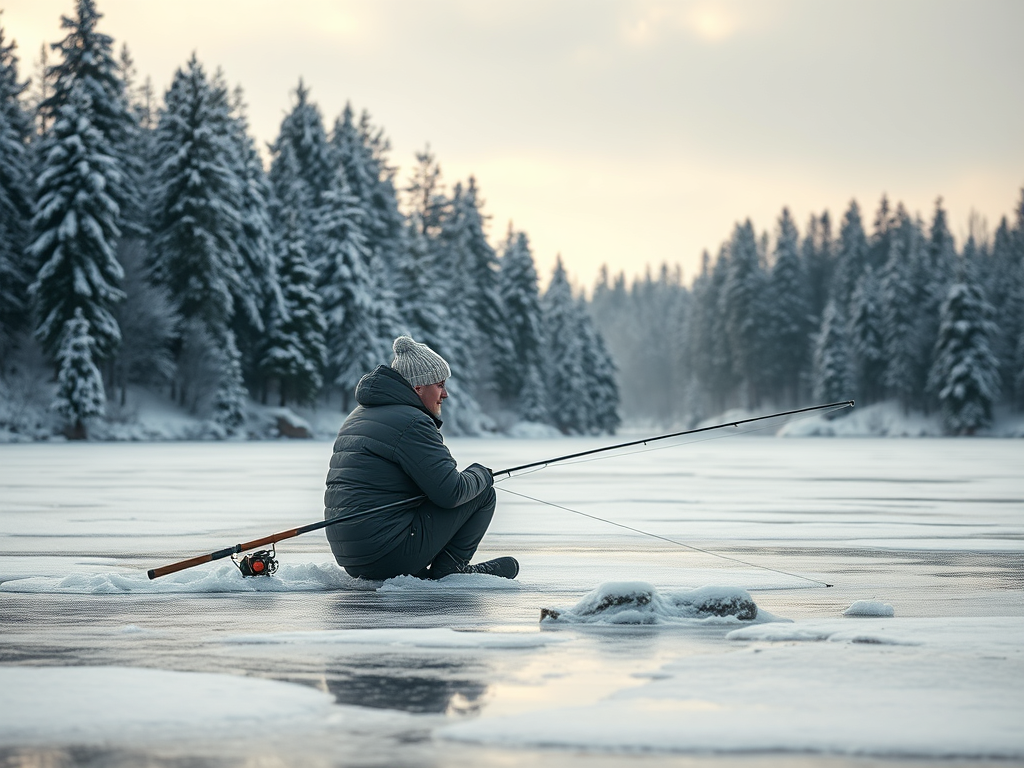
Winter fishing isn’t about luck.
It’s about restraint, observation, and timing.
In warmer months, fish are forgiving. They move often, feed aggressively, and tolerate mistakes. Winter strips that generosity away. Fish slow down. Metabolism drops. Movement becomes deliberate. Food becomes scarce — which means wasted effort is punished.
Winter fishing isn’t harder because fish disappear.
It’s harder because everything happens slower, including success.
To fish correctly in winter, you don’t outwork the environment. You align with it.
Why Winter Fishing Works Differently
Cold water changes biology.
As temperatures drop:
- Fish metabolism slows
- Feeding windows shorten
- Movement becomes minimal
- Energy conservation becomes priority
Fish are not roaming. They are positioning.
That means winter fishing is less about covering water and more about finding stillness. If you’re moving constantly, drilling endlessly, or changing tactics every few minutes, you’re probably burning calories faster than the fish ever will.
Winter fishing rewards patience because patience mirrors the ecosystem.
The First Mental Shift: Fishing Is Energy Management
Before technique, gear, or location, winter fishing starts with a decision:
How much energy can you afford to spend for food?
Fishing that burns more calories than it provides is not survival — it’s risk.
This is why winter fishing must be:
- Efficient
- Intentional
- Low-output
- Predictable
You don’t chase fish in winter. You wait where they already are.
Once you accept that, everything else simplifies.
Understanding Where Fish Go in Winter
Fish don’t disappear in winter. They consolidate.
Cold water pushes fish toward:
- Deeper water
- Stable temperatures
- Reduced current
- Consistent oxygen levels
In lakes, this usually means:
- Drop-offs
- Basins
- Old river channels
- Weed edges that still hold oxygen
In rivers and streams:
- Deep pools
- Inside bends
- Areas behind structure
- Slow-moving sections near depth changes
Fish choose places where they can survive winter with minimal movement. Your job is to find those places and stay put.
Transition: Ice Changes Everything — But Not the Rules
Ice fishing looks different, but the principles don’t change.
Ice blocks light. It reduces oxygen exchange. It stabilizes temperature.
Under ice, fish are even more conservative. They sit. They wait. They feed briefly.
This means:
- Location matters more than lure choice
- Noise matters more than movement
- Subtlety beats aggression
Winter fishing isn’t about triggering reaction strikes. It’s about presenting easy calories.
Timing Matters More Than Duration
One of the most common winter fishing mistakes is fishing too long in the wrong window.
Fish don’t feed continuously in winter. They feed in short, predictable bursts, often tied to:
- Light changes
- Pressure shifts
- Temperature stability
Midday often outperforms morning and evening in winter because:
- Light penetrates deeper
- Water temperatures stabilize
- Fish are more active
This flips summer instincts on their head.
If you fish all day waiting for results, you’re wasting energy. If you fish the right hour in the right place, you conserve it.
Winter fishing is about precision timing, not endurance.
The Right Gear Philosophy: Simple and Reliable
Winter punishes complexity.
Cold hands fumble knots. Ice freezes mechanisms. Small failures cascade fast.
Winter fishing gear should be:
- Minimal
- Durable
- Easy to manipulate with numb fingers
- Repairable in the field
Simple rods, basic rigs, and proven knots outperform elaborate setups.
If it’s hard to operate with gloves on, it doesn’t belong in winter.
Bait Selection: Smaller, Slower, Easier
In winter, fish want meals that:
- Require minimal effort
- Are easy to digest
- Don’t require chasing
This is why:
- Smaller baits outperform large ones
- Natural presentations outperform flashy ones
- Slow movement outperforms fast retrieves
Live bait works exceptionally well because it behaves naturally without energy input from you.
If using artificial lures:
- Downsize
- Slow down
- Pause longer than feels reasonable
If you think you’re fishing too slow, slow down more.
Transition: Movement Is the Enemy
This is where winter fishing separates experienced people from frustrated ones.
Movement costs calories. It creates noise. It spooks fish that are already conserving energy.
Drilling dozens of holes, hopping constantly, or changing spots repeatedly is a summer mindset applied to winter — and it fails.
Instead:
- Choose a high-probability location
- Commit to it
- Let the environment settle
- Give fish time to respond
Winter fishing rewards stillness because fish themselves are still.
Ice Safety Is Part of Fishing Correctly
Fishing correctly in winter includes not dying while doing it.
Ice conditions change constantly. Thickness varies with:
- Current
- Snow cover
- Temperature fluctuations
- Vegetation
- Inlets and outlets
Safe ice is not assumed — it is confirmed.
Basic rules:
- Check thickness frequently
- Avoid moving water
- Spread weight
- Carry ice picks
- Fish with awareness, not confidence
No fish is worth breaking through ice.
Survival fishing ends immediately if you become the emergency.
Processing Fish in Cold Conditions
Catching fish is only half the equation. Processing them efficiently matters just as much.
Cold helps preservation but hurts dexterity.
Best practices:
- Process fish quickly
- Keep them from freezing solid before cleaning
- Protect hands from prolonged exposure
- Work deliberately, not hurried
Frozen fish are harder to gut cleanly. Slush-cold fish are ideal.
Winter rewards people who think one step ahead.
Calories vs. Effort: Knowing When Fishing Makes Sense
Winter fishing is powerful — but it’s not always the right choice.
If:
- Travel costs too much energy
- Conditions are unsafe
- Fish density is low
- Gear reliability is compromised
Then fishing may be a net loss.
Survival isn’t about doing everything. It’s about doing the right thing at the right time.
Sometimes, conserving energy beats seeking food.
That judgment is part of fishing correctly.
Transition: Fishing as a System, Not an Activity
The people who succeed at winter fishing don’t treat it as an isolated task.
It’s integrated with:
- Shelter location
- Fire availability
- Water access
- Daylight planning
- Recovery time
Fishing close to shelter saves energy. Fishing near fire allows warming breaks. Fishing near water sources reduces hauling effort.
Winter survival is about stacking efficiencies.
Fishing should support the system — not strain it.
Common Winter Fishing Mistakes
Most failures follow familiar patterns:
- Moving too much
- Fishing too fast
- Using oversized bait
- Ignoring safety
- Overestimating fish activity
- Underestimating energy cost
Winter doesn’t forgive impatience.
Modern Lessons Hidden in Winter Fishing
Even outside survival scenarios, winter fishing teaches something relevant:
- Not all effort produces results
- Timing beats intensity
- Stillness can be strategic
- Conservation creates opportunity
Winter fishing rewards people who can slow down without panicking — a skill that scales far beyond the ice.
Final Thought: Winter Fishing Is About Alignment
When you fish correctly in winter, it stops feeling like struggle.
You stop forcing outcomes.
You stop chasing movement.
You start waiting where life still exists.
Cold water doesn’t eliminate opportunity.
It concentrates it.
And the people who understand that don’t just catch fish — they conserve energy, preserve clarity, and extend their ability to survive the season.
In winter, success isn’t loud.
It’s quiet, patient, and deliberate.
That’s how fish live.
And that’s how you catch them.
Kommentar verfassen