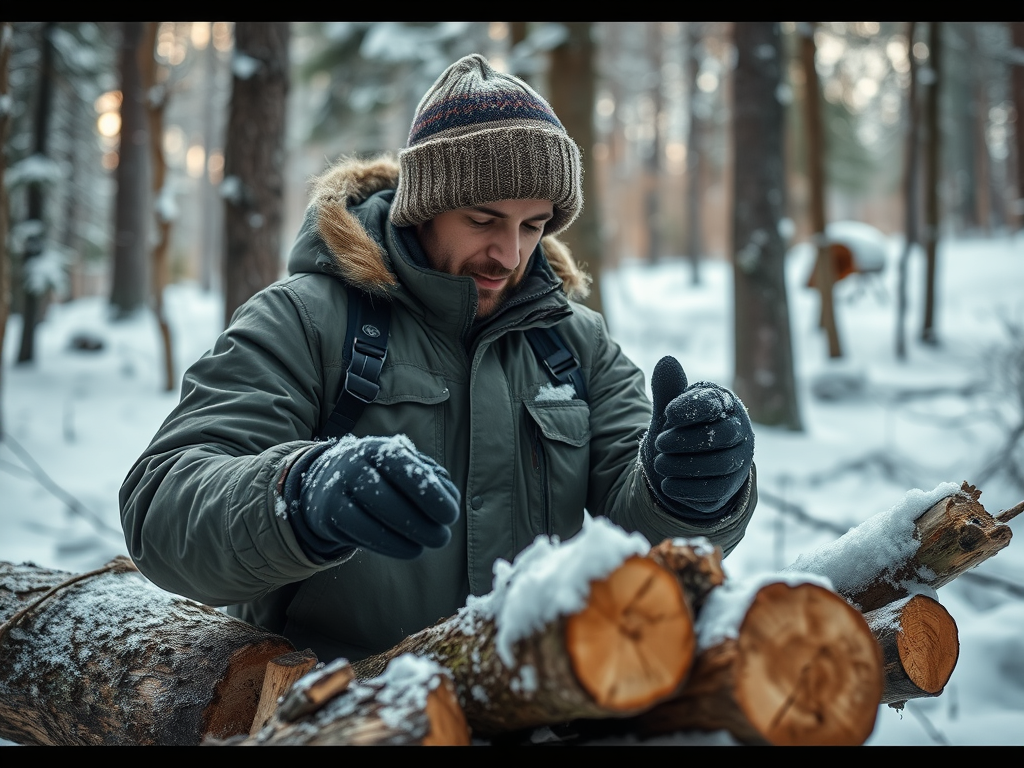
In winter, wood isn’t just material.
It’s fuel, structure, insulation, and margin.
If you choose the wrong wood, your fire smokes instead of burns, your shelter collapses instead of protects, and your energy disappears faster than the daylight. If you choose the right wood, everything else gets easier — warmth lasts longer, structures hold, and effort actually pays off.
Winter survival isn’t about how much wood you gather.
It’s about how well you judge it.
And judgment is the real skill.
Why Wood Selection Matters More in Winter
In warm seasons, wood is forgiving. Damp logs still burn eventually. Weak branches still hold light weight. Mistakes cost time, not safety.
Winter removes that forgiveness.
Cold magnifies flaws:
- Wet wood freezes instead of drying
- Rotten wood crumbles under load
- Green wood smolders and steals heat
- Snow hides decay and moisture
At the same time, your energy is limited. Every wrong piece you carry costs calories you can’t waste.
So winter forces a higher standard: every piece of wood must earn its place.
The First Mental Shift: Ignore the Ground
The most important rule of winter wood gathering is simple:
The ground is lying to you.
Anything touching snow or frozen soil is absorbing moisture. Even if it looks dry, it isn’t. Snow melts against it during the day, refreezes at night, and slowly soaks the wood from the outside in.
In winter, the best wood is almost always:
- Off the ground
- Elevated
- Protected from direct snow
- Exposed to wind, not buried by it
This is where beginners fail. They grab what’s closest. Experienced people look up.
Standing Dead Wood: Winter’s Best Resource
If winter had a cheat code, this would be it.
Standing dead trees — trees that have died but are still upright — are prime winter wood.
Why they work:
- They drain moisture downward instead of absorbing it
- Wind dries them continuously
- Snow doesn’t bury them
- Inner wood is often dry even if the outside isn’t
Not all standing dead wood is equal, though. This is where judgment matters.
Good standing dead wood:
- Snaps cleanly when broken
- Sounds hollow when struck
- Has tight bark or bark that peels cleanly
- Isn’t punky or spongy
Bad standing dead wood:
- Crumbles in your hands
- Is soft or fibrous inside
- Smells musty
- Falls apart under light pressure
Winter wood selection is about testing, not guessing.
Transition: Fire Wood and Shelter Wood Are Not the Same
Here’s a mistake that costs people time and energy: assuming all wood serves the same purpose.
It doesn’t.
In winter, you are collecting for two different systems:
- Fire
- Shelter
They overlap, but they don’t have identical requirements.
Understanding the difference keeps you from burning structural material or trying to build with firewood that can’t hold weight.
The Best Wood for Fire: Burn Hot, Burn Clean
Firewood in winter needs to do one thing well: produce heat efficiently.
That means:
- Low moisture
- Dense enough to burn steadily
- Small enough to process with limited energy
Hardwoods are ideal when available — they burn longer and hotter. Softwoods ignite faster and are excellent for starting fires but burn quickly.
Key indicators of good firewood:
- Cracks or “checking” at the ends
- Light weight for its size
- Sharp snap when broken
- Dry, pale interior when split
If you split a piece and the inside is dry, you’re winning — even if the outside was damp or icy.
Feathering the Fire: Size Matters More Than Species
In winter, size beats species.
People get obsessed with tree types and forget scale. A perfectly dry log won’t help you if it’s too large to ignite. Winter fires succeed because they scale gradually.
You want:
- Fine tinder
- Pencil-sized sticks
- Thumb-sized kindling
- Wrist-sized fuel
- Larger logs only after heat is established
That means collecting variety, not just big pieces.
The best winter wood gatherers always come back with bundles that look intentional — not random.
The Best Wood for Shelter: Strength Before Burn
Shelter wood has different priorities:
- Structural integrity
- Resistance to snapping under load
- Predictable break points
- Stability when frozen
You don’t want rotten, brittle, or punky wood for shelter. It may look solid, but winter stress exposes weakness fast.
Good shelter wood:
- Is dead but not decayed
- Bends slightly before breaking
- Has intact fibers
- Feels solid and heavy
For ridgelines and load-bearing supports, slightly green wood can actually be an advantage. It’s heavier and harder to ignite, but it’s also stronger.
Which is exactly what you want for structure.
Smooth Transition: One Trip, Two Goals
Energy efficiency matters in winter.
The best approach is dual-purpose gathering:
- Firewood that can be processed smaller
- Shelter wood that’s clearly marked and separated
- No unnecessary back-and-forth
Experienced people stage wood:
- Firewood near the fire site
- Structural wood near the shelter site
- Tinder protected in pockets or packs
This reduces confusion later — especially when cold affects focus and coordination.
Snow, Ice, and Hidden Moisture
Winter adds a layer of deception to wood.
Snow-covered wood isn’t just wet on the outside. As it melts, water gets pulled into cracks and grain lines, then freezes again — expanding and damaging fibers.
That’s why:
- Split wood dries faster than whole logs
- Smaller pieces outperform larger ones
- Inner wood is more reliable than bark-covered surfaces
If you’re unsure, split it. The inside tells the truth.
Wind-Dried vs. Sun-Dried
Sun exposure matters less in winter than airflow.
Wind is your ally.
Wood exposed to moving air dries faster than wood sitting in sunlight but blocked by snowbanks or brush. This is why ridgelines, tree edges, and open stands are goldmines for winter wood.
Still air equals trapped moisture.
Moving air equals opportunity.
Processing Wood Without Burning Yourself Out
Winter isn’t the time for brute force.
Good wood selection reduces processing needs. Bad selection forces you to compensate with effort — sawing, chopping, splitting while cold and tired.
The goal is minimum processing, maximum payoff.
That means:
- Collecting wood already close to usable size
- Snapping over batoning when possible
- Letting structure dictate length naturally
- Avoiding wood that requires excessive trimming
Every calorie saved is a future decision you get to make calmly.
Common Winter Wood Mistakes
Most people fail in predictable ways:
- Collecting only large logs
- Trusting bark instead of inner wood
- Burning structural wood out of desperation
- Over-collecting wet ground wood
- Underestimating how much dry wood they need
Winter doesn’t care about optimism. It responds to preparation.
Wood as a System, Not a Resource
The biggest shift experienced winter survivors make is this:
They stop thinking of wood as “stuff” and start thinking of it as infrastructure.
Firewood supports heat.
Shelter wood supports rest.
Insulation wood supports sleep.
Each piece has a role. When wood is chosen intentionally, the entire survival system stabilizes.
When it’s random, everything stays fragile.
Modern Lessons From an Old Skill
Even outside wilderness survival, this skill matters.
Winter still rewards:
- Discernment over effort
- Quality over quantity
- Early decisions over late reactions
- Systems over improvisation
Wood selection is just a physical version of a broader truth: not everything available is useful, and not everything useful is worth the cost.
Final Thought: The Right Wood Makes Winter Quiet
When you choose the right wood, winter changes tone.
Fire catches faster.
Shelter feels solid.
Effort decreases.
Confidence increases.
You stop fighting the environment and start working within it.
Winter survival isn’t about domination.
It’s about alignment.
And it starts with knowing which wood to pick up — and which to leave where it lies.
Kommentar verfassen