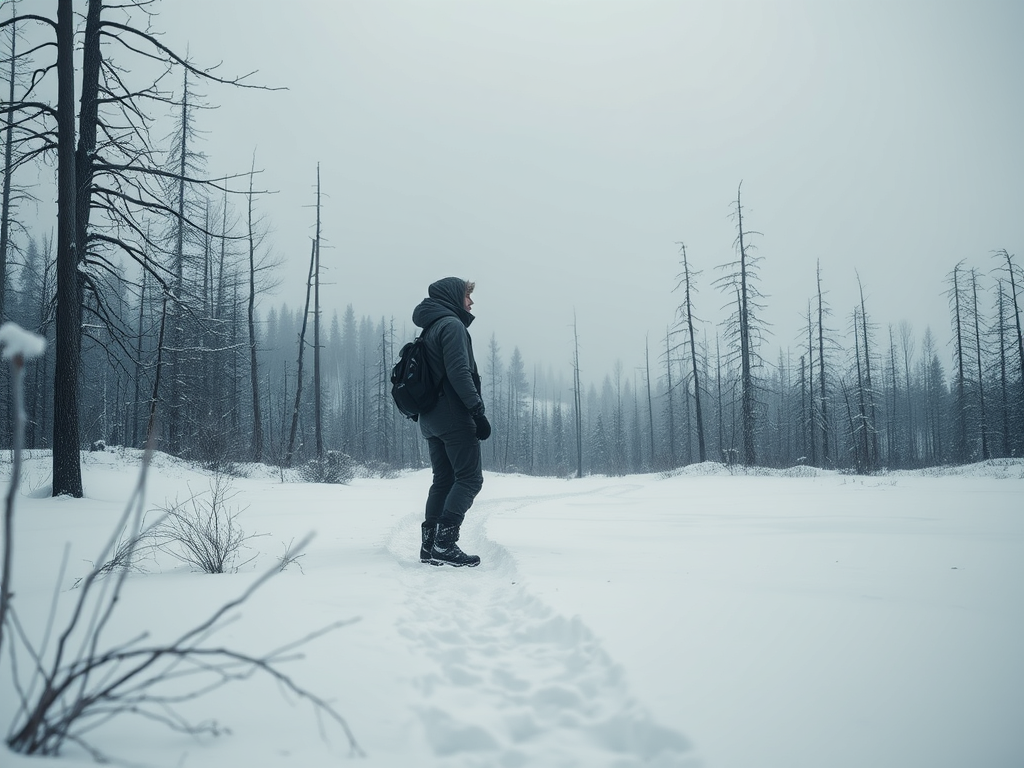
Winter doesn’t defeat people because they quit too early.
It defeats them because they don’t quit soon enough.
There’s a point in cold weather where effort stops helping and starts hurting. The instinct you need to survive winter isn’t relentless drive — it’s the ability to recognize that line and respect it.
Knowing when to stop is not weakness. In winter, it’s intelligence.
Winter Turns Momentum Against You
In warmer seasons, momentum saves you.
You keep moving, you stay warm.
You push harder, you get through it faster.
Winter breaks that rule.
Cold steals energy faster than motion can replace it. Fatigue stacks quietly. Judgment degrades without warning. By the time you realize you’re in trouble, your ability to fix it is already compromised.
That’s why winter survival isn’t about pushing through resistance — it’s about identifying the moment when pushing becomes the wrong move.
The Dangerous Lie: “Just a Little More”
The most common phrase before winter disasters isn’t panic.
It’s confidence.
“Just a little farther.”
“Just one more task.”
“We’re almost there.”
That voice feels logical. It feels efficient. It feels strong. And it’s often completely wrong.
Winter amplifies consequences. That “little more” can mean:
- Sweating through your layers and freezing later
- Burning calories you won’t replace
- Losing dexterity you’ll need soon
- Making mistakes that cascade
Knowing when to stop cuts that chain reaction early.
Stopping Is an Active Skill
Stopping doesn’t mean giving up. It means choosing preservation over progress.
In winter, stopping can look like:
- Setting up shelter earlier than planned
- Turning back despite sunk cost
- Pausing to dry gear instead of pushing forward
- Sleeping before exhaustion forces it
- Ending the day with energy still in reserve
This is not passive behavior. It’s calculated restraint.
People who survive winter consistently leave margin. People who don’t use everything they have — because winter will eventually take it anyway.
Why Winter Punishes Ego Harder Than Error
You can survive small technical mistakes in winter.
You rarely survive ego.
Ego says:
- “I’ve done worse.”
- “I don’t want to waste time.”
- “I should be able to handle this.”
Winter doesn’t care what you should be able to handle. It only responds to what you actually can handle right now.
Stopping early feels embarrassing. Pushing until failure feels justified — until it isn’t.
The Body’s Warning System Is Delayed
One of the most dangerous things about cold is that your body lies to you.
Cold dulls pain signals. Hunger feels quieter. Fatigue hides behind adrenaline. You feel functional longer than you actually are.
By the time you feel like stopping, your margin is already gone.
Experienced winter survivors don’t wait for pain or fear. They stop based on time, temperature, daylight, and condition — not emotion.
Modern Life Has the Same Problem
You don’t need snowshoes and a pack to experience this instinct gap.
Modern winter has its own version:
- Working through burnout because “it’s just a busy season”
- Ignoring illness because “everyone’s tired”
- Forcing productivity while energy is at its lowest
- Treating winter like a personal failure instead of a seasonal shift
The people who handle winter best adjust early. They reduce output, increase recovery, and stop pretending winter is neutral.
Quitting vs. Quitting Smart
There’s a difference between quitting because you’re uncomfortable and stopping because conditions demand it.
Smart stopping is:
- Data-driven
- Pre-decided
- Calm
- Early
It’s deciding in advance what conditions end the mission. Temperature thresholds. Time limits. Energy levels. Mental clarity.
When those limits are hit, you stop. No debate. No negotiation.
That’s how professionals survive environments that don’t forgive mistakes.
The Confidence of Restraint
Here’s the part most people miss: knowing when to stop actually makes you more capable.
When you stop early:
- You recover faster
- You preserve gear and health
- You learn instead of barely surviving
- You’re ready for the next attempt
Winter isn’t a test you pass once. It’s a season you move through repeatedly. Sustainability matters more than heroics.
Final Thought
Winter survival isn’t about how much pain you can tolerate.
It’s about how clearly you can think when things get hard.
The instinct to stop — early, calmly, without drama — is what keeps you alive long enough to try again tomorrow.
In winter, the strongest move is sometimes standing still.
Kommentar verfassen